First work and targeted projects
Understanding perceptions and controversies
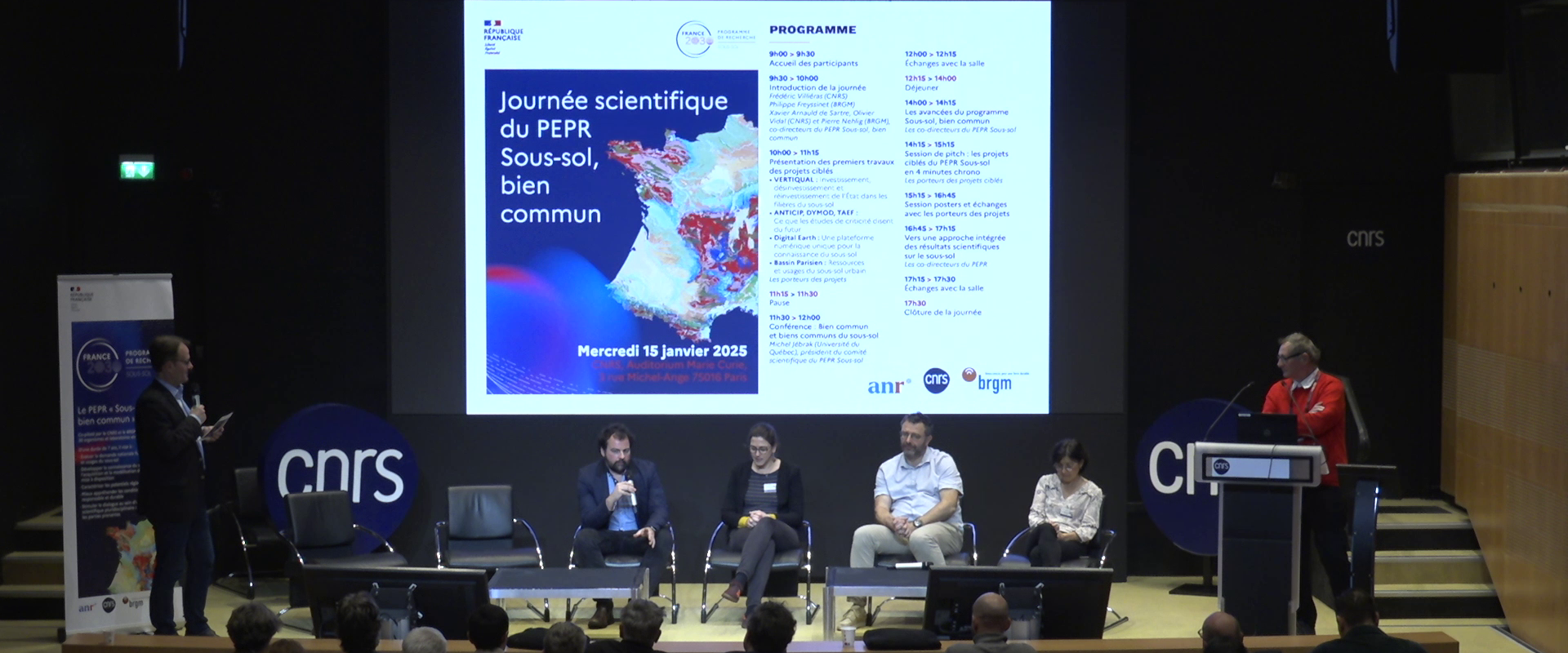
The VERTIQUAL project analyzes the growing politicization of subsurface uses. It aims to establish a mapping of discourses and controversies, highlighting the contrasting perceptions of citizens, industrialists and public authorities. A better understanding of these dynamics is essential to avoid future tensions.
This project is part of a sociological and legal approach that seeks to identify factors influencing the perception of the subsurface by different actors. It also questions the regulatory frameworks that condition political and industrial decisions.
Anticipating future needs
With energy transition, the need for mineral resources and underground spaces will intensify. The ANTICIP project explores possible futures for the subsurface, developing scenarios in collaboration with local actors. For its part, DyMod models the supply and demand for underground resources by 2050, integrating economic and environmental impacts. The TAEF project complements these analyses by forecasting the technical and economic implications of mineral resource exploitation.
These projects not only identify challenges related to subsurface resources, but also propose adaptation strategies in the face of economic and environmental uncertainties. By integrating dynamic models, they aim to provide predictive tools to aid decision-making.
Making information accessible
One of the major challenges is the lack of knowledge about the subsurface. The Digital Earth project develops a platform providing access to precise data, useful for researchers, decision-makers and the general public.
This platform will serve as an interface to promote access to scientific information on the subsurface, highlighting interactive visualizations and educational tools for a wide audience. The objective is to create a common space for sharing knowledge in order to better integrate these issues into public policies.
Regional studies and local applications
The S-PASS (Bassin parisien – Ressources et usages du sous-sol urbain) regional project aims to better understand the Paris subsurface's resources and their potential uses. It notably plans to establish a 3D digital model associating geology, geotechnics and infrastructure. The objective is to improve urban planning and explore uses such as geothermal energy and construction material valorization.
This project highlights the need for better coordination between urban planners, geologists and local authorities to maximize subsurface benefits while minimizing usage conflicts.
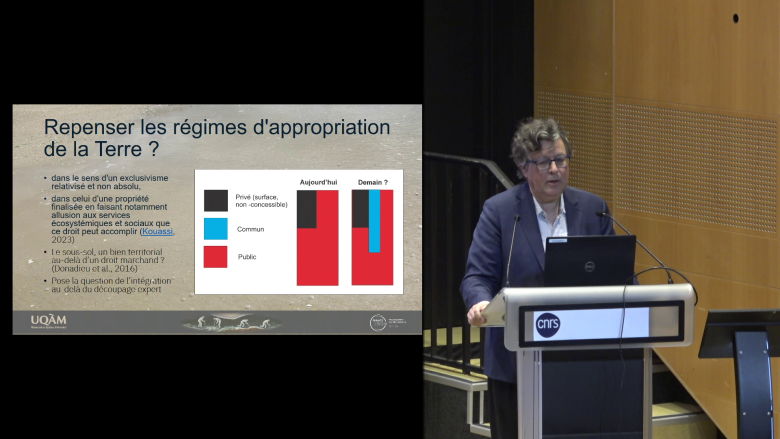
Conférence de Michèle Jébrak (UQAM), membre du comité scientifique international du programme, sur la notion de bien(s) commun(s).
© PEPR Sous-sol, bien commun
Debates around the subsurface as a common good
Michèle Jébrak's (UQAM) conference allowed for debate on the notion of common good. The subsurface, although intensely exploited for centuries, remains a space whose collective management method is still unclear despite institutional tools established over the past half-century, at both national and international scales.
Several questions emerge: how to delimit the subsurface as a common good? What is its ecosystem value (in terms of ecosystem services, natural capital, human needs)?
Integrating this notion into public policies requires in-depth reflection on governance issues, resource sharing, knowledge and social acceptability of exploitation projects.
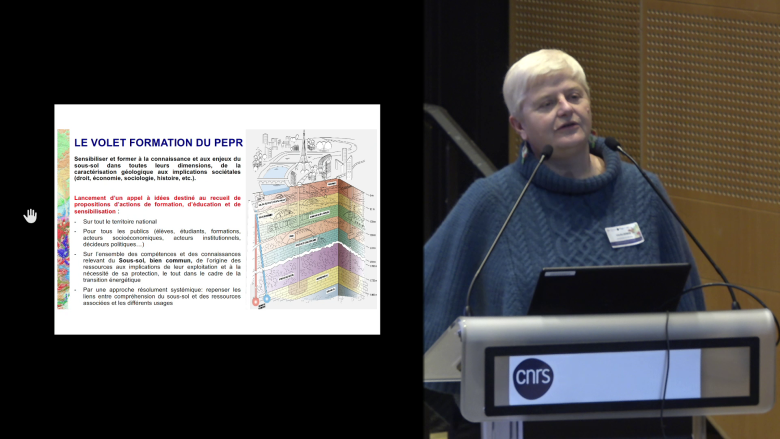
Présentation de Cécile Robin (Université de Rennes), co-coordinatrice du volet formation du programme.
© PEPR Sous-sol, bien commun
Events and perspectives
Ongoing projects and funding
All 13 targeted projects of the program have started. A final launch meeting is scheduled for the Guianese regional project GOYAVES on February 27 (more information coming soon).
Furthermore, the first wave of calls for projects is underway, with a total budget of 10 million euros. To date, 31 proposals have been submitted, bringing together 13 lead institutions.
Training and awareness: a crucial issue
The program launched a call for expressions of interest to fund training and awareness projects related to knowledge and subsurface issues in all their dimensions, from geological characterization to societal implications. Result: 38 proposals were submitted, from the associative and academic world, targeting high school students, university students and teachers. Proposed initiatives include digital tools, field trips, documentary corpora and serious games. A first working day on these projects is scheduled for March 10, 2025.
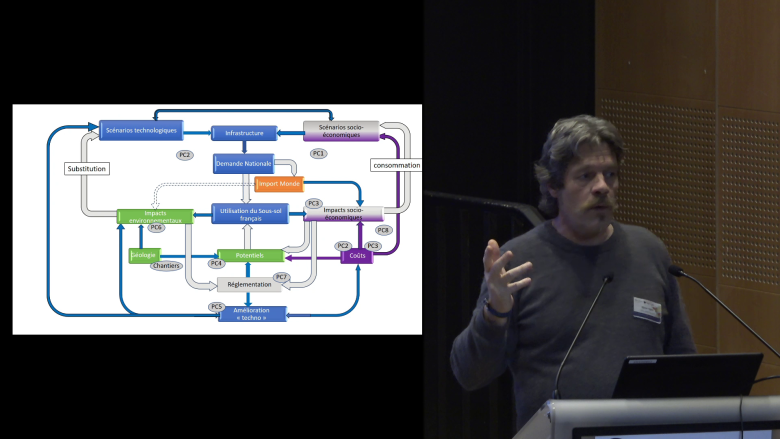
Présentation d'Olivier Vidal (Université Grenoble Alpes), co-directeur du programme Sous-sol, bien commun.
© PEPR Sous-sol, bien commun
Toward an integrated approach to results
The program's management emphasized the need for a systemic and interdisciplinary vision to avoid compartmentalization of research and avoid a blockage in the intersection of different approaches necessary for sustainable and chosen management of the subsurface. Two key questions will guide future work:
- How to define a common denominator among all actors involved?
- How to anticipate discontinuous evolutions and unforeseen events in (very) long-term sustainable management of the subsurface?
A necessary dialogue
Making the subsurface a common good implies a paradigm shift. It involves not only knowing it better, but also fostering dialogue between scientists, decision-makers and citizens. Thanks to the 35 research projects that will soon compose the program and its integrated approach, the Subsurface, Common Good program paves the way for more sustainable and responsible management of this strategic space.
Don't miss the 4-minute project presentation session, to understand everything quickly!