Project background and objectives
Helium is a strategic, high-value resource essential for numerous industrial, scientific, and medical applications, yet its global supply is increasingly constrained while demand continues to rise. Unlike other critical raw materials, helium cannot be manufactured and is generated exclusively through geological processes over millions of years, making its exploration and sustainable exploitation a major scientific and strategic challenge. In Europe, and particularly in France, domestic helium resources remain poorly characterized, leading to a strong dependence on imports.
Current knowledge in France has primarily focused on CO₂-He systems. In contrast, N₂–He systems, which often display higher helium concentrations and offer the decisive advantage of being carbon-free, are still largely underexplored. Nevertheless, recent measurements revealing unusually high helium concentrations in regions spanning Poitou, the Morvan Massif, and the western Massif Central point to a genuine, yet almost-untapped, national potential. Unlocking this potential requires targeted, interdisciplinary research and the development of next-generation exploration strategies adapted to these specific geological contexts.
H-eXPLORE aims to advance subsurface gas exploration by developing innovative and integrated workflows tailored to complex geological systems. The project focuses on improving scientific understanding of promising carbon-free helium systems, particularly underexplored N₂–He reservoirs. By targeting regions with untapped resource potential, H-eXPLORE opens new perspectives for national helium exploration. Interdisciplinarity lies at the core of the project, combining geoscience disciplines to address subsurface complexity. A strong emphasis is placed on research drilling to maximize data acquisition and to improve the calibration and reliability of non-invasive exploration methods.
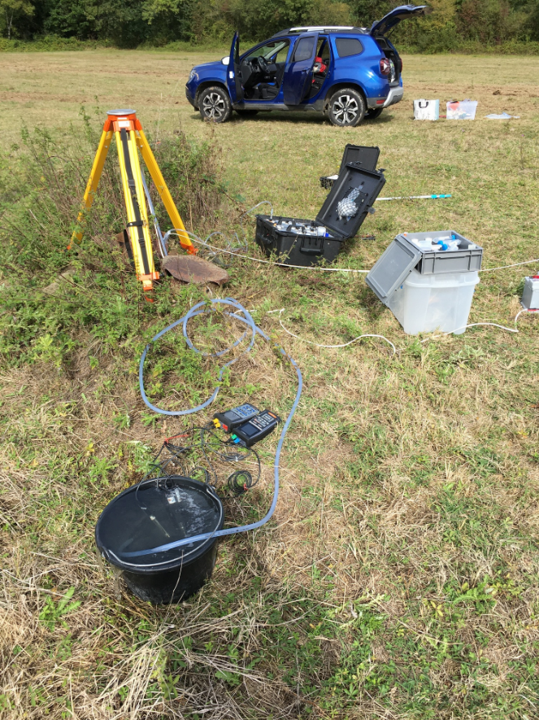
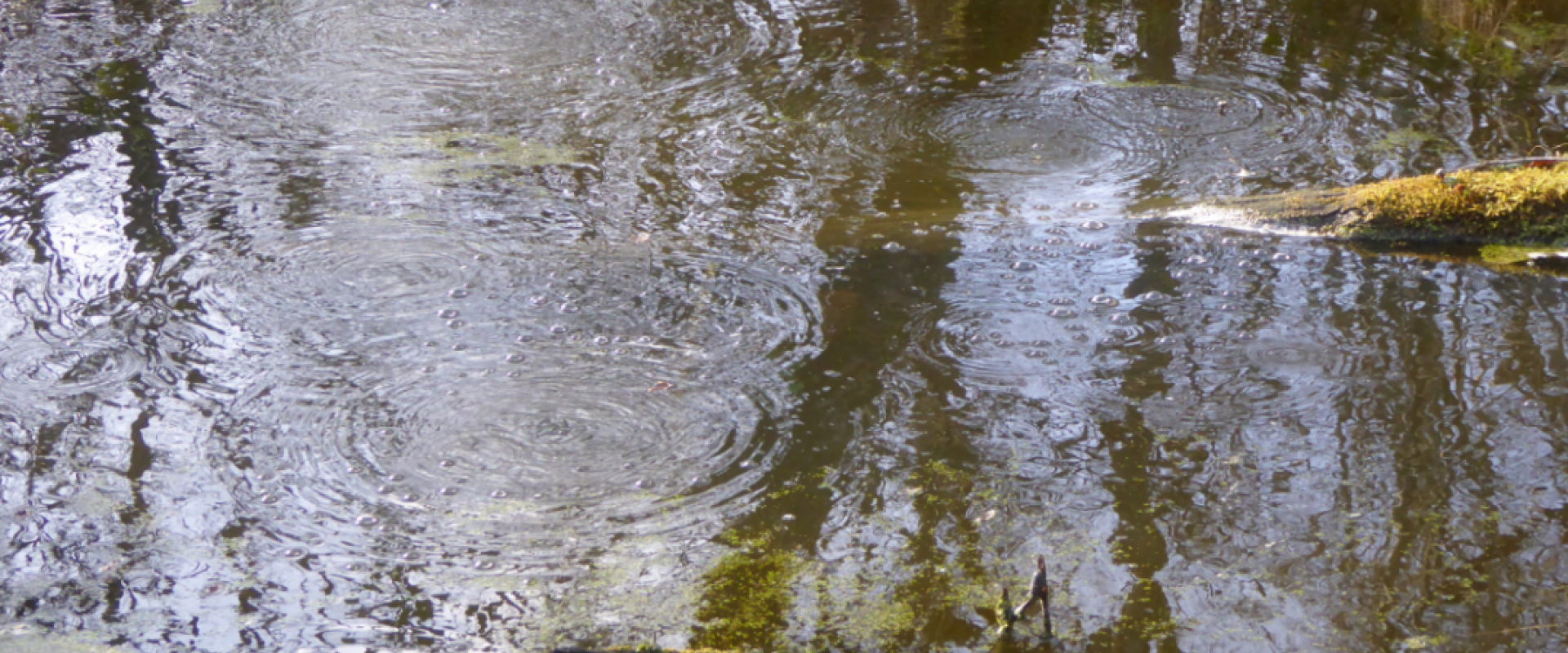
Surface degassing of water from the “Fontaines Salées sec” borehole, Availles-Limouzine, during pumping in 2022.
Gas composition: ~ 94% N2 (nitrogen) & ~ 5% He (helium).
© F. Gal
Expected outcomes
H-eXPLORE is expected to deliver a set of coherent and high-impact results spanning scientific knowledge, exploration technologies, and strategic assessment. At the scientific level, the project will substantially improve understanding of N₂–He systems, including their geological controls, fluid sources, migration pathways, and accumulation mechanisms. Through integrated geochemical, isotopic, geophysical, and modeling approaches, it will generate new conceptual models applicable to helium and related subsurface gases, including natural hydrogen.
At the methodological level, H-eXPLORE will produce and validate innovative exploration workflows that combine large-scale favorability mapping with in-depth site characterization. These workflows will be tested through the full characterization of a selected site, including a medium-depth scientific borehole, providing high-resolution datasets and a unique opportunity to calibrate models and hypotheses. This will strengthen national expertise in scientific drilling and integrated subsurface investigation.
At the strategic level, the project will deliver an updated, scientifically grounded assessment of France’s helium potential, identifying priority areas and key knowledge gaps. The results will support public authorities and industrial stakeholders in decision-making related to resource exploration, energy transition, and critical raw materials strategy. Beyond helium, the outcomes will have broader relevance for low-carbon subsurface resources, reinforcing France’s position in emerging exploration technologies and contributing to medium-term economic, technological, and societal benefits.
Project organization
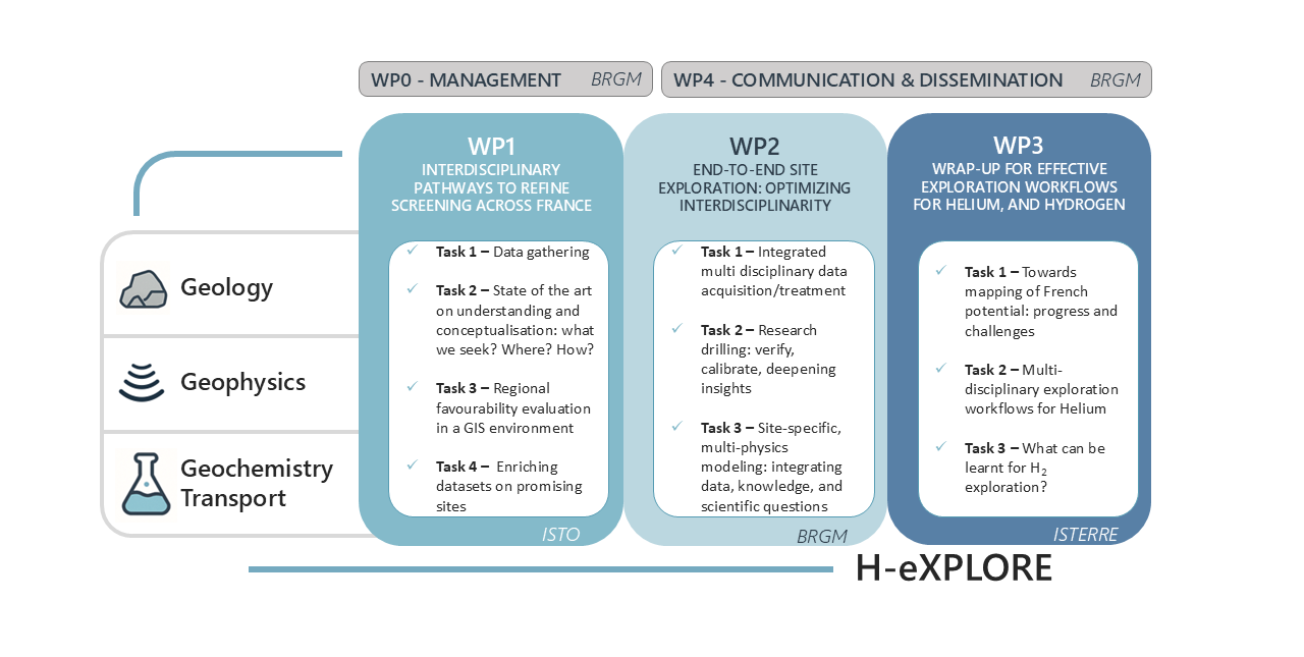
Scientific presentation
Project leaders
Annick Loschetter (BRGM), H-eXPLORE project leader

Loschetter Annick
Loschetter Annick
Project Manager and Scientific Program Lead on H₂/He at BRGM, with experience spanning CCS, geothermal energy, and hydrogen research. In coordination with the Energy Scientific Program Directorate, she contributes to exploratory scientific work, strategic reflections on hydrogen and helium, and the facilitation of internal synergies.
Project leader of the H-Explore project, with a transversal approach supporting interactions between disciplines.
Thomas de Boisgrollier, scientific manager for partner 45-8 ENERGY

Thomas de Boisgrollier
Thomas de Boisgrollier
Thomas de Boisgrollier, PhD in geology, new venture manager at 45-8 ENERGY, involved for 20 years in exploring natural resources, today helium and native hydrogen.
Partners