Project background and objectives
Mineral resources are essential to ensure the ecological transition and carbon neutrality of the European Union (EU) by 2050. To reduce geopolitical dependencies, the EU adopted the Critical Raw Materials Act in 2024, which aims to secure local and sustainable supply chains and promote ethical and responsible exploitation of critical raw materials (CRM). Europe could thus better valorize its subsurface to address these strategic issues.
The European Variscan orogenic belt hosts numerous CRM resources generating renewed interest, as evidenced by the recent identification of several extraction projects deemed of strategic importance for the EU. Other deposits likely remain to be discovered, either buried deep in the Variscan basement or under adjacent sedimentary covers. Given that deposits result from a combination of geological processes at different temporal and spatial scales, improving geological knowledge of the European Variscan belt is crucial to better assess the CRM potential of the subsurface.
The Variscan orogenic crust, of high metamorphic grade, is indeed now considered as a particular crustal segment, endowed with specific lithological, structural, and thermo-mechanical characteristics, acquired before and during orogenesis. The Variscan belt would be of the "hot orogen" type with limited topography, shaped by transpressive to strike-slip tectonic regimes under high thermal conditions, with widespread crustal melting and voluminous granitic magmatism. These particular geological processes very likely played a decisive role in the formation of CRM deposits. This is confirmed by their specific location within the Variscan orogenic crust and their temporal distribution, not only during collapse and extension, but throughout the orogenic history (from the late Devonian to the Permian).
DISCOVERY is based on the strong hypothesis of a close link between the particular history of the Variscan orogenic crust and its abundance in CRM.
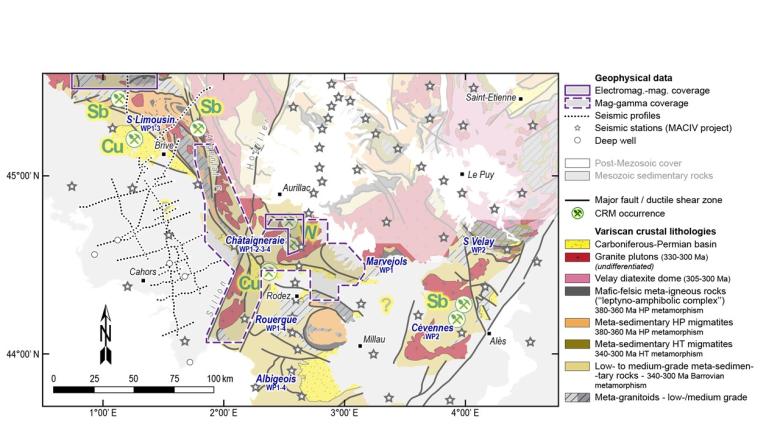
Geological map of the southern French Massif Central and available geophysical data highlighting DISCOVERY target areas.
DISCOVERY
The DISCOVERY project aims to reassess the nature of Variscan orogenic processes and their metallogenic implications, which remain globally poorly understood. There is an urgent need for updated data and knowledge on three key categories of processes, each linked to a specific evolutionary stage of the orogen, for which geological and metallogenic questions are particularly complex:
- Pre-Variscan history and tectono-metamorphic evolution of the orogen. The formation of Variscan deposits was influenced by the fertility and spatial distribution of protoliths, as well as by the mobilization of metals during their high-grade metamorphism. These processes themselves depend on the pre-Variscan history, still largely debated, as well as on the 3D architecture and metamorphic evolution of the orogenic crust.
- Syn- to late-orogenic granitic magmatism. Many Variscan deposits are associated with the emplacement of granitic magmas from varied sources, locally including the mantle, as well as their fractionation in the upper crust and their magmatic and hydrothermal evolution. Yet, the corresponding physico-chemical processes remain poorly constrained and require a thorough reassessment.
- Late- to post-orogenic destruction of the orogenic chain and formation of sedimentary basins. The geometry, filling dynamics, and thermicity of late-orogenic basins are still poorly known, whereas they exert major control on the genesis of basin-associated base metal deposits.
DISCOVERY is ultimately structured around two ambitious objectives:
- address fundamental and current research questions on the evolution of hot orogenic belts;
- link these geological processes to the diversity of mineral resources formed in this context.
To achieve these objectives, we will study the southwestern French Massif Central, representative of the Western European Variscan orogenic crust and a key area for CRM exploration.
Expected outcomes
DISCOVERY will address major scientific questions in Earth Sciences. The proposed approach will allow, for the first time, the construction of a 3D lithological and structural model at the scale of an entire segment of a hot orogen, which will have profound implications for our understanding of the architecture of these systems.
The integrated study of granitic magmatic-mineralized systems will link emerging concepts on the petrogenesis of granitic magmas to the parameters controlling the formation of magmatic and hydrothermal critical metal deposits. The analysis of filling modes and geometry of post-orogenic basins will allow understanding of how a hot orogen, with a priori limited topography, is destroyed by surface processes. Finally, we will clarify how hot orogenic processes influence the overall structure, composition, and CRM fertility of the continental crust. These results will be transposable and testable in other orogenic contexts.
The DISCOVERY project will moreover enrich geological models on the formation and preservation of CRM deposits, by providing geophysical and geochemical proxies to locate them. These tools could help exploration companies and geological surveys develop predictive mapping approaches, particularly in the Massif Central.
DISCOVERY will furthermore be accompanied by a significant communication component, whether to scientists or the public (scientific mediation events, training, activities...). The dissemination of knowledge and results will improve understanding between stakeholders (citizens, private companies, institutions) and promote informed decisions on mining exploitation, in connection with the objectives of the "Sous-Sol, bien commun" program, for sustainable and responsible management of the subsurface.
Project organization
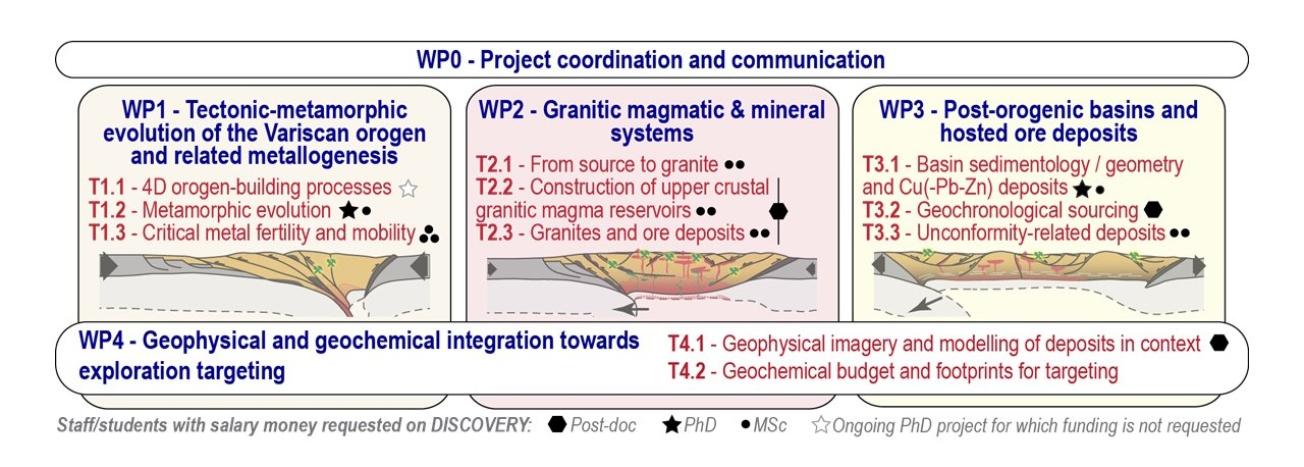
Scientific presentation
Project leaders
Laurent Beccaletto (BRGM), Senior Geologist, specialist of Carboniferous-Permian sedimentary basins.
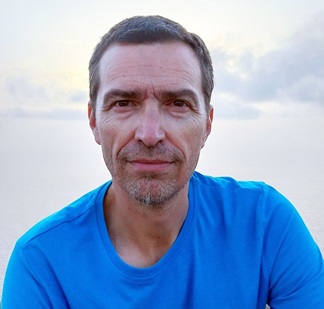
Laurent Beccaletto, Géologue sénior au BRGM, spécialiste des bassins sédimentaires carbonifères-permiens
Laurent Beccaletto
Laurent Beccaletto, Dr HDR, is a senior geologist at BRGM, expert in the study of sedimentary basins using borehole and seismic reflection data. His research focuses on Carboniferous-Permian basins in outcrop and subsurface. He is co-leader of DISCOVERY and WP3, dedicated to the study of late-orogenic Carboniferous-Permian basins and related mineral resources.
Oscar Laurent (CNRS), CNRS researcher at Géosciences Environnement Toulouse.
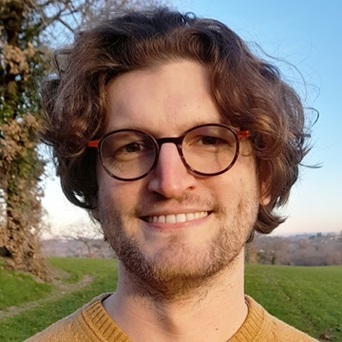
Oscar Laurent
Oscar Laurent
Oscar Laurent is a CNRS researcher at Géosciences Environnement Toulouse. His research focuses on the role of silicic magma genesis, differentiation and emplacement mechanisms in the evolution of the Earth’s continental crust and the formation of magmatic-hydrothermal mineral resources. He employs an integrated, multiscale approach combining field geology, petrography, geochronology, elemental and isotopic geochemistry, notably leveraging high-spatial resolution techniques such as in situ analyses and mapping by laser ablation, inductively coupled plasma mass spectrometry. He is co-leading the DISCOVERY project and WP2 dedicated to Variscan granitic magmatic-hydrothermal systems.
Partners