Project background and objectives
In France, in Europe, and in the rest of the world, conducting the energy transition toward decarbonized and renewable energies induces a growing need for critical metals, particularly lithium, tungsten, cobalt, nickel, mainly extracted from ores and mining residues. The processes commonly used in ore processing lack efficiency to recover minerals and precious metals from the subsoil while respecting the environment. It is therefore essential to improve the efficiency of these techniques in order to sustainably extract critical metals from primary sources, ores, and secondary sources, such as mining residues, in line with the issues of ecological transition.
Flotation is a highly efficient and widely used process to separate minerals of interest from their gangue (non-valuable minerals). This method is based on the use of reagents aimed at modifying the surface tension of minerals and then on the injection of air bubbles that recover the particles rendered hydrophobic. However, flotation is still not optimal, leading to a longer and more costly process, due to the difficulty in understanding and simulating:
- the physico-chemical phenomena of adsorption, at solid/liquid and liquid/gas interfaces;
- their link with particle transport and the recovery of valuable minerals in turbulent flows.
Indeed, this method involves heterogeneous materials, a complex water chemical composition, particles, bubbles, and reagents interacting in complex flows, particularly for fine materials which are attracting growing interest. Currently, only atomic simulations and fluid dynamics simulations at the considerably larger reactor scale are taken into account, without mechanistic understanding of the phenomena at play. The efficiency of flotation can be significantly improved by improving its simulation and ultimately mineral recovery (and therefore metals). This by taking into account multi-physical and multi-scale phenomena, from the atomic scale to the reactor scale, and by understanding and mechanistically simulating the interaction forces between particles and their environment during their transport.
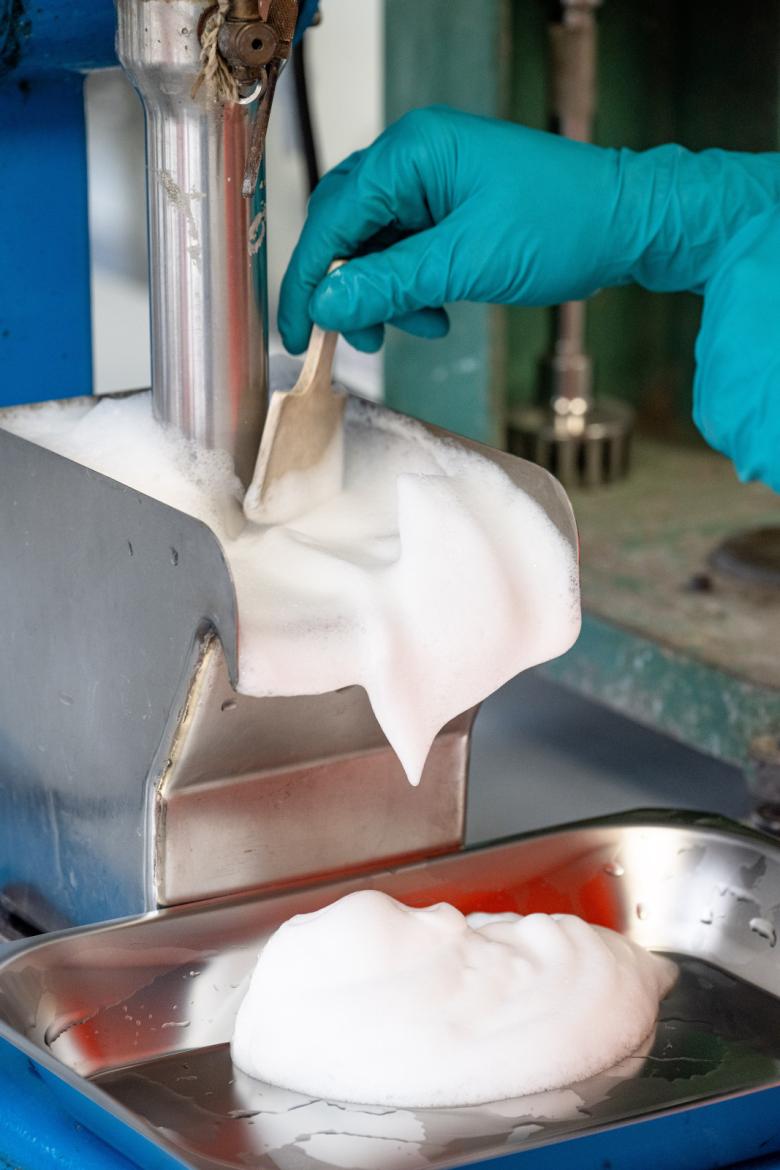
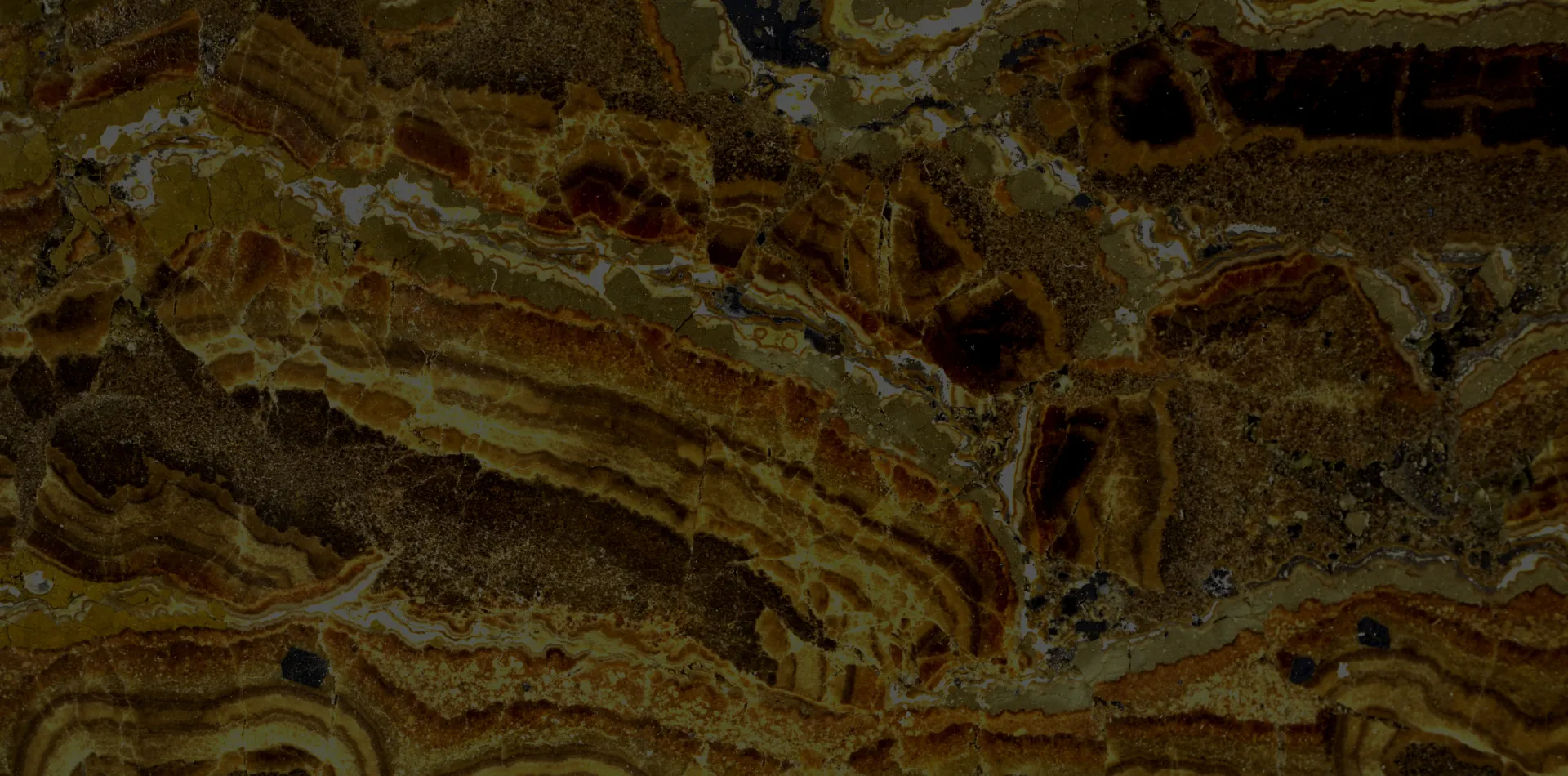
Example of the results of a flotation experiment conducted at BRGM's Plat'Inn platform in Orléans on mineral raw materials and the circular economy (Loiret, 2023).
© BRGM - Didier Depoorter
Expected outcomes
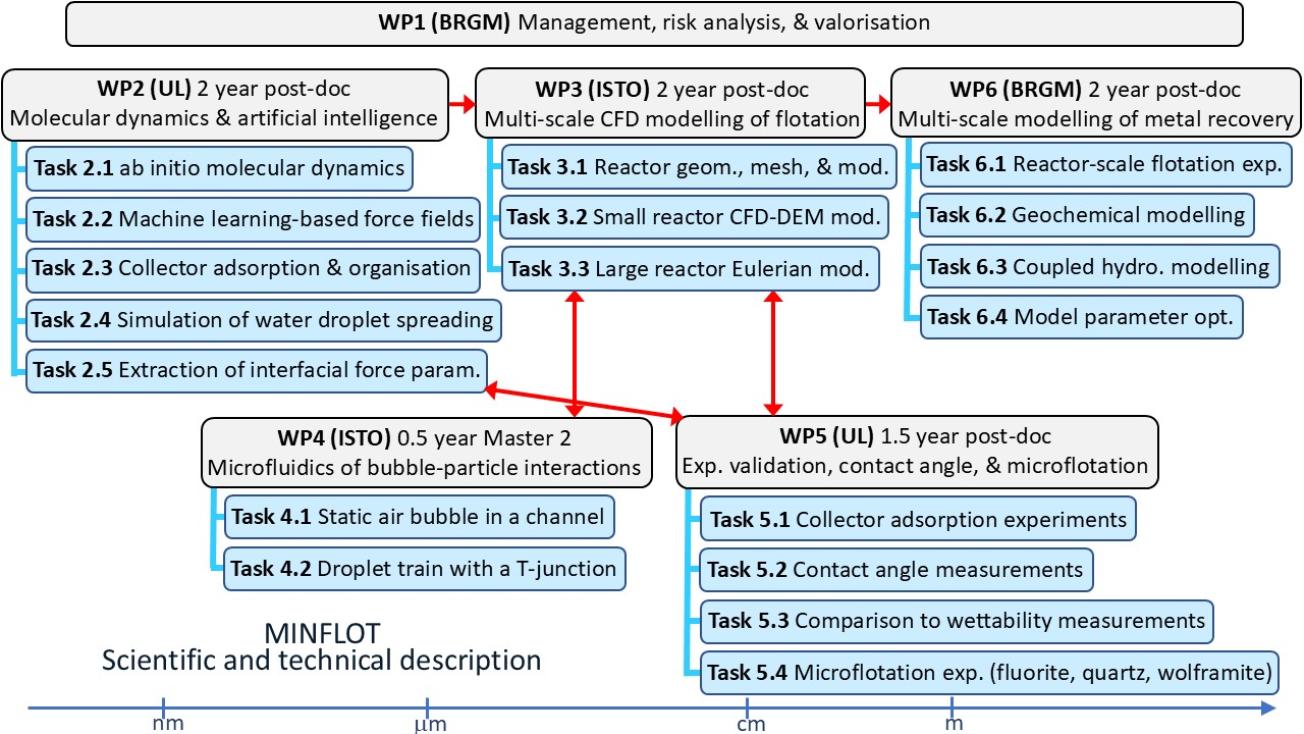
The MINFLOT project proposes a new and innovative multidisciplinary and multi-scale approach closely combining cutting-edge experiments and numerical modeling from the atomic scale, where key physico-chemical phenomena at interfaces occur, to the reactor scale, through the particle and microreactor scale.
- Molecular dynamics simulations coupled with artificial intelligence will provide input data to calculate colloidal interaction forces involved in fluid dynamics simulation with the discrete element method to reproduce the flow and reactivity of particles in microreactors. These simulations will be validated by microfluidic and microreactor experiments. Electrokinetic, wettability, and geochemical measurements and models linking atomic and hydrodynamic simulations will also be undertaken.
- Then, the flow and reactive transport at the larger reactor scale will be modeled taking into account the results of smaller-scale simulations and measurements of mineral and metal recovery from innovative flotation experiments. The expected advances will considerably improve the reliability of flotation simulations as well as the efficiency and cost of the process. This will make it possible to process larger quantities of ores and mining waste in order to recover the metals essential to the ecological transition, such as tungsten and lithium.
Project organization
Présentation scientifique
Project leader
Philippe Leroy (BRGM), geophysical research engineer.
Philippe Leroy
Philippe Leroy
Philippe Leroy is a research engineer in geophysics at the geological department of the French geological survey (BRGM), Orléans, focusing his work on environmental geosciences to mitigate anthropologic pollution including radioactive waste and CO2 sequestration, and risks, and water and mineral resource exploration. He is an internationally recognized expert in near-surface geophysics/hydrogeophysics including pore-scale geophysics and physical chemistry. He has published extensively, including 43 papers in international journals of hydrogeophysics, geochemistry, and colloid and interface science (h-index 27, around 4000 citations in Google Scholar). He is currently the principal investigator of one French national research agency project on using electrical imaging to improve hydrocarbon bioremediation and BRGM leader of one French and German national research agency project on using electrical imaging to monitor the confining properties of clay materials on stored geothermal and hydrogen energies. He is also the principal investigator of a new PEPR Sous-sol project on developing multiscale and multiphysical simulations from the molecular to the reactor scale to improve mineral flotation techniques and the recovery of critical metals like lithium and tungsten from European ores and mining waste. He has done also 34 communications in international congresses and workshops, and 14 seminars. Philippe Leroy was guest editor in hydrogeophysics of the journal Geophysics and co-convenor of the European geosciences union session on using hydrogeophysics to improve hydrology, agronomy and agricultural practices. He co-supervised 6 PhDs (and 2 on going) and 4 post-docs (and 1 on going).
Partners