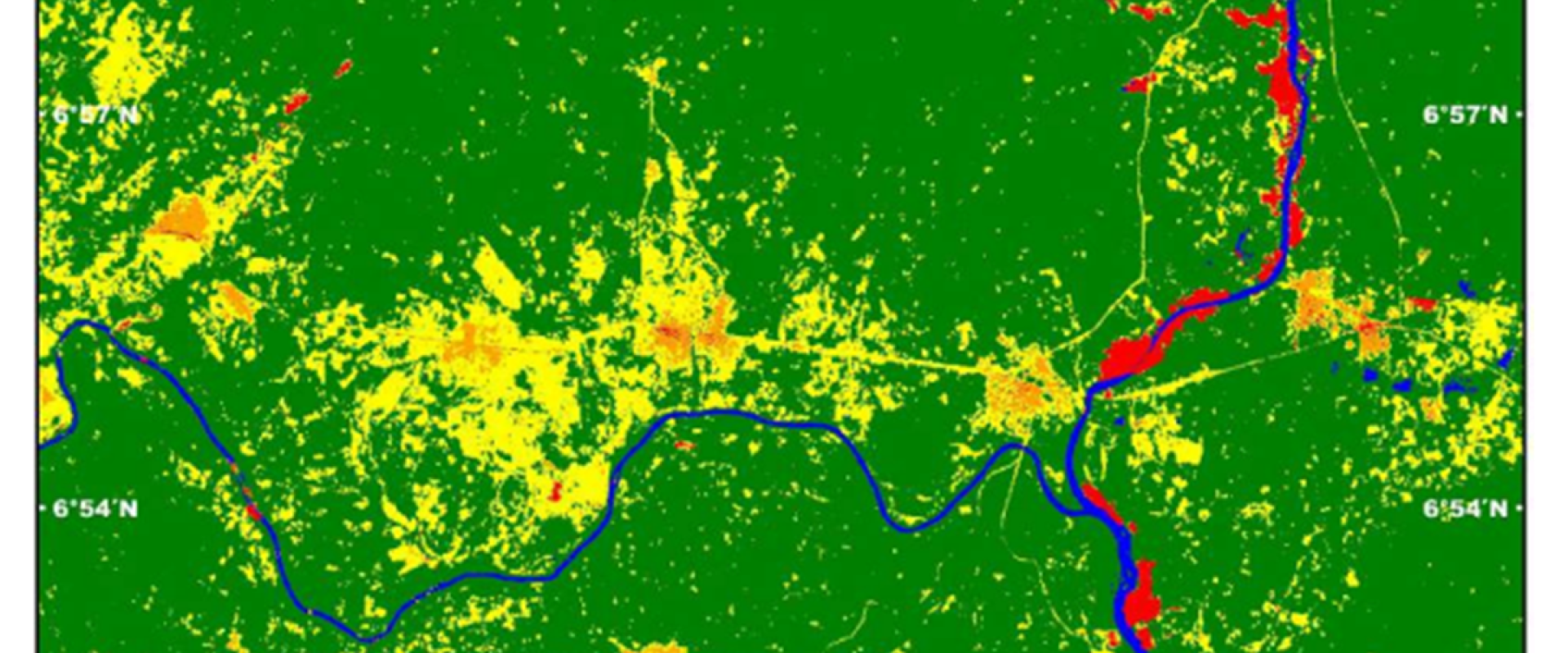
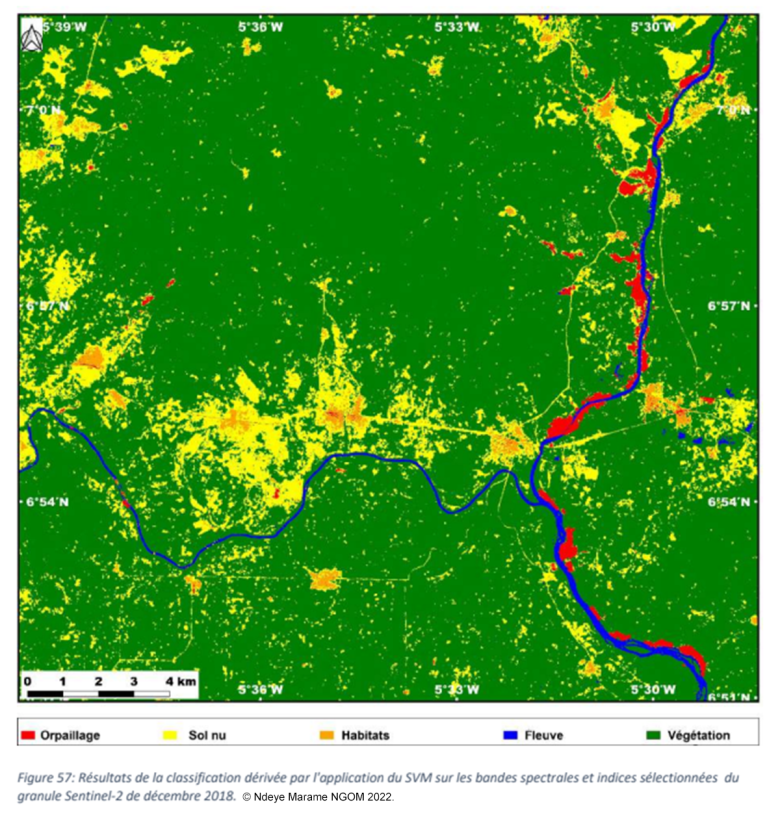
Données satellitaires utilisées dans le cadre du LMI MINERWA pour cartographier l’expansion de l'orpaillage le long du fleuve Bandama en Côte d'Ivoire et les impacts sur l’occupation du sol et les changements d’usage. Le projet LCA-SUB utilisera également cette approche.
© Ndeye Marame NGOM 2022.
In a context of growing demand for subsurface resources, identifying environmental impacts of different uses is crucial to contribute to debate on conditions for sustainable subsurface use. Scientific communities use several life cycle thinking methods and tools for this, notably the life cycle assessment (LCA) method based on the inventory of incoming and outgoing flows at each stage of a product or service's life cycle in order to evaluate its potential environmental impacts.
7 partners brought together for 6 years to improve life cycle thinking data and methods...
Co-coordinated by Antoine Beylot (BRGM) and Guido Sonnemann (University of Bordeaux), the LCA-SUB project of the Subsurface, Common Good PEPR thus aims to improve these methods and more specifically to:
- Develop innovative approaches for life cycle inventory modeling, particularly via coupling with other environmental data modeling and collection approaches (predictive modeling via process simulation, prospective modeling, remote sensing, etc.).
- Develop environmental assessment methods applicable to metal LCA, to better characterize impacts particularly in terms of toxicity, water footprint, impacts on biodiversity and ecosystem services.
...And apply these methods to subsurface use cases
The LCA-SUB project focuses on three application cases relating to the subsurface:
- Extraction of mineral resources and supplies to France
From mine to metal, integrating waste management, it will involve identifying potential environmental impacts that mineral resource exploitation implies. Researchers will apply predictive models developed in the project to exploitation cases based on experimental tests conducted in PC5, and will analyze French mineral resource supply chains using LCA. They will ensure to put potential environmental impacts of metal production into perspective with planetary boundaries, and to reflect on potential impact transfers from one region of the world to another, and from one impact category to another (for example on climate change or soil pollution).
- Geothermal energy and CO₂ storage
The project further aims to develop a parameterized LCA model applied to the geothermal sector in France, and its implementation on case studies to evaluate the influence of input parameter uncertainty in LCA on result sensitivity in order to provide recommendations within the framework of environmental assessment on the geothermal sector, by identifying parameters to prioritize.
It also plans to develop a dynamic assessment framework for CO₂ storage, considering different storage and leakage scenarios, possibly linked with other projects of the Subsurface, Common Good PEPR.
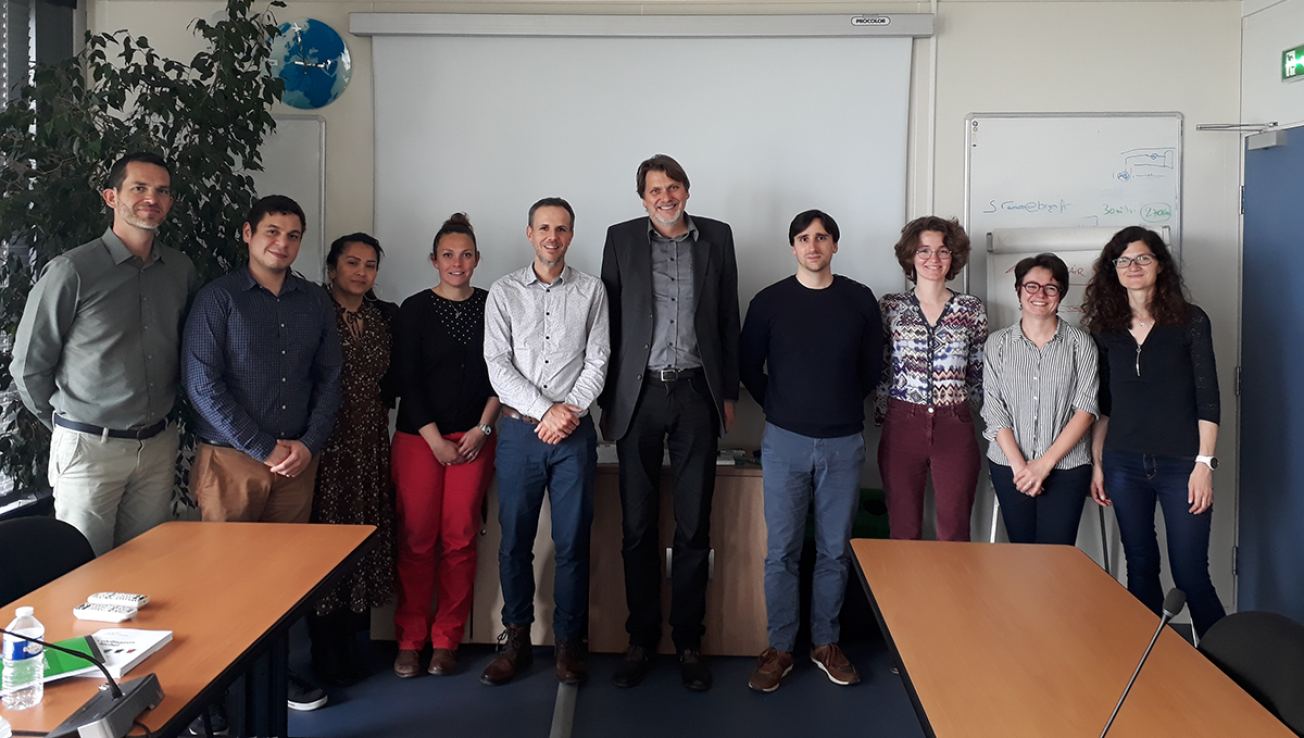
Project members met on May 21, 2024 in Paris to exchange on initial research work to be conducted, articulate planned work, and exchange on opportunities for links with other PEPR Subsurface or European projects.
The LCA-SUB project, coordinated by BRGM, associates University of Bordeaux, École Nationale Supérieure des Mines de Paris, CEA, IFP Energies nouvelles, INERIS and IRD.