

These second annual meetings—since the project’s official launch in April 2024—provided an opportunity to review progress and major achievements.
Here is an overview of the presentations and demonstrations showcased during the event.

Setting up a collaborative digital infrastructure
The Digital Earth project is part of a fast-growing ecosystem of digital platforms designed to become the new working environment for scientists.
This development marks a major shift in approach: in an increasingly digital scientific landscape, structured around thematic hubs and specialized silos.
Digital Earth is one of four digital platform projects with converging philosophies, all coordinated by BRGM. It works in close collaboration with:
- the BRGM’s Integrative Digital Platform (PNI)
- the digital platform of the IRiMa Risks research program.
- the digital platform of the OneWater research program.
Coordinated by BRGM, these platforms aim to federate as much as possible to avoid a proliferation of redundant technical solutions and, ultimately, to build a central platform offering interfaces adapted to the needs of different professions and projects.
All these platforms share the same ambition: to provide scientific communities with a shared digital workspace that gives access to data, code, and tools for processing, visualizing, and disseminating scientific information.
To meet their operational and adaptability goals, BRGM promotes the creation of a common architecture designed with and for the scientific community. This evolving architecture is built on existing open-source functional components, ensuring robustness and long-term sustainability.
The three pillars of the digital earth project
Digital Earth is structured around three interdependent areas of work.
1. Developing and deploying a new digital working environment
A collaborative platform designed to meet scientists’ needs.
2. Upgrading and operationalizing numerous existing digital tools and information systems
These include:
- SI Géol.
- GIS tools.
- RGF tools, and more.
The ambition is to digitize all geological workflows, from fieldwork to 3D modelling to data dissemination.
A key step in this process—one that receives significant effort—is the standardization of geological data and workflows.
3. Research and development of new tools and working environments
Early explored directions include:
- Developing digital twins of the subsurface.
- Exploring the potential of artificial intelligence in geosciences.
- New tools for spatial prediction.
- Adapting dynamic subsurface modelling to new energy-related uses.
Geological data: from acquisition to knowledge
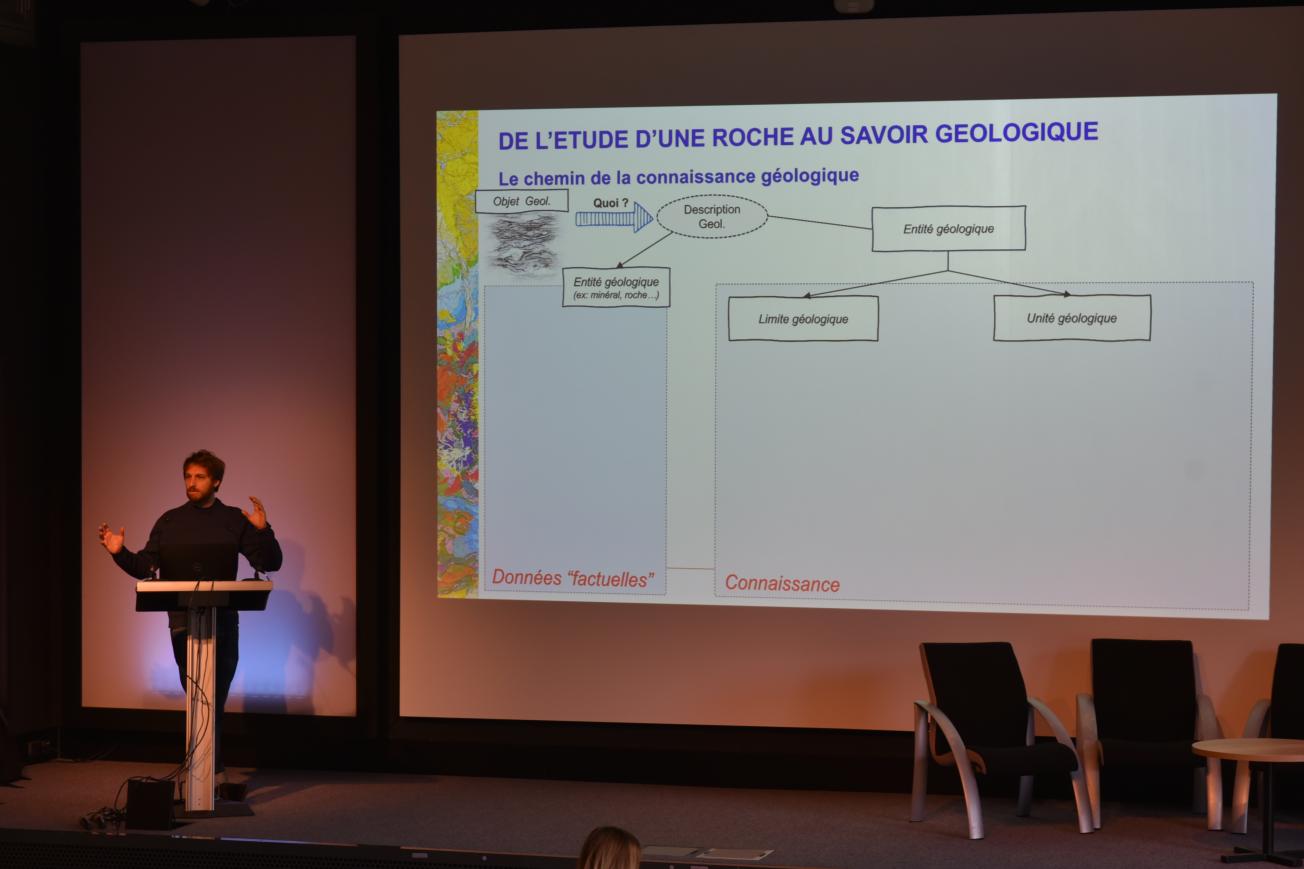
Presentations and discussions highlighted the importance of storing geological data in systems that ensure a controlled and standardized vocabulary across BRGM and beyond. This effort began with SIGEOL, and Digital Earth aims to build on the progress made over the past decade.
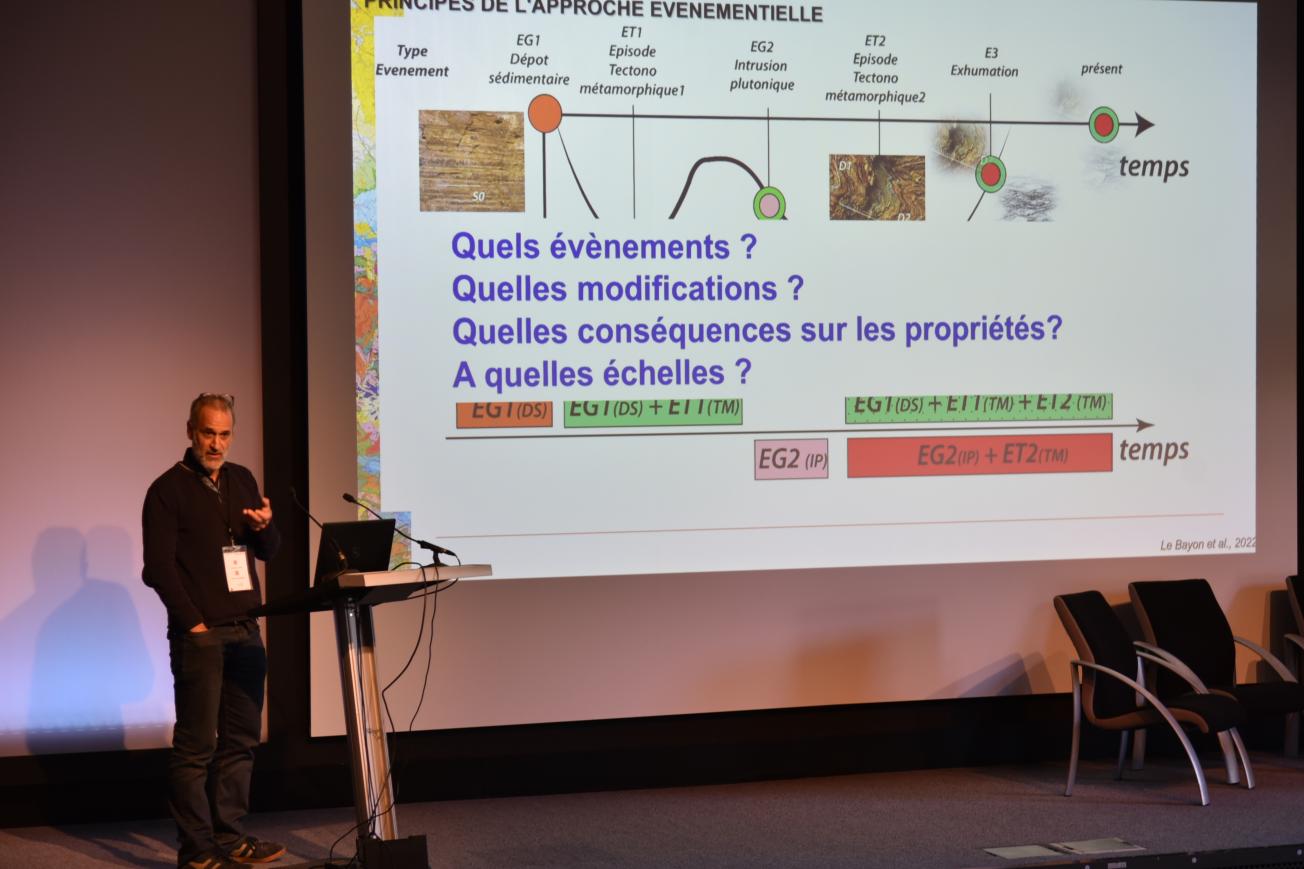
Building geological knowledge is a complex process—from fieldwork to laboratory analyses to modelling. Work carried out jointly among the various Work Packages focuses on digitizing geological expertise within an information system that will eventually link:
- Geological data.
- Analytical data (including geophysical data).
- The processes used to transform data into knowledge.
The goal is to provide an integrated approach, from quantifying the physico-chemical properties of rocks to understanding the processes behind their formation and geological history.
Artificial intelligence (AI) for geology
Over the past fifteen years, the revolution in deep learning—combined with rapid progress in data acquisition—has renewed interest in AI methods.
Digital Earth dedicates a significant portion of its research work to AI, especially for predictive mapping.
Although AI has been used in geosciences for many years, its applications remain limited because geosciences pose challenges for data-driven approaches:
- Data are often scarce or costly to obtain.
- Data often provide only indirect information.
- “Ground truth” is rarely accessible.
- Expert interpretation plays a central role, bringing subjectivity.
The challenges of predictive mapping
Field campaigns remain essential for acquiring data and validating geological interpretations. However, they are often limited by:
- the size of the area to be covered
- the dangerousness of certain environments
- the scarcity of data
AI-based predictive mapping acts as an amplifier of geological expertise: it automates the analysis of large datasets, produces preliminary maps, and helps better target field missions to confirm hypotheses.
Within Digital Earth, predictive mapping is organized around two main themes:
- Characterizing superficial formations
- Detecting subsurface geological bodies
This approach must address three main questions:
- How can we combine available datasets effectively?
- How can we identify geological objects from these data?
- How can we capture and represent uncertainty?
Spatial Prediction
Developing the Digital Earth platform requires integrating new spatial prediction tools. These tools sit at the heart of the project, linking:
- Observational data.
- Geological concepts.
- Predictive models.
- Dynamic modelling.
Key challenges include matching measured data with prediction needs. Sometimes only indirect data can be used to support predictions. Conversely, large datasets—such as those from geophysics—still carry uncertainties that must be managed.
The platform’s intent is to bring together many experts from different disciplines, working at various theoretical levels, to address these challenges.
Dynamic Modelling
Dynamic modelling is crucial for developing solutions to challenges brought on by new subsurface-related uses—especially those driven by the energy transition. Much geological knowledge has been developed in other fields (natural hazards, oil and gas exploration), and many digital simulation tools inherited from these fields can support new subsurface technologies.
The key question is: how can we adapt these tools to meet the needs of new subsurface uses?
Three major challenges stand out:
- Adapting to new geological objects (e.g., faults and fractures that represent both risks and resource targets).
- Simulating new physical processes such as geomechanics (hydro-mechanical coupling) or reactive transport
- Dealing with limited data in areas that have been little studied acquiring such data requires major investment.
These analyses require reliable numerical models that make full use of existing data.
Work Package 5 includes numerous efforts aimed at evolving these modelling tools to address these challenges.
- Six actions focus on improving modelling of fractured and faulted environments, including mesh generation and simulation of mechanical interactions.
- Six others target extending simulation capacities to new coupled physical processes, including mechanical stability, hydrodynamics, reactive transport, and water–gas interactions in the case of soluble gas migration.
Journée annuelle 2026 du projet Digital Earth
© PEPR Sous-sol, bien commun
Stands, workshops, and posters
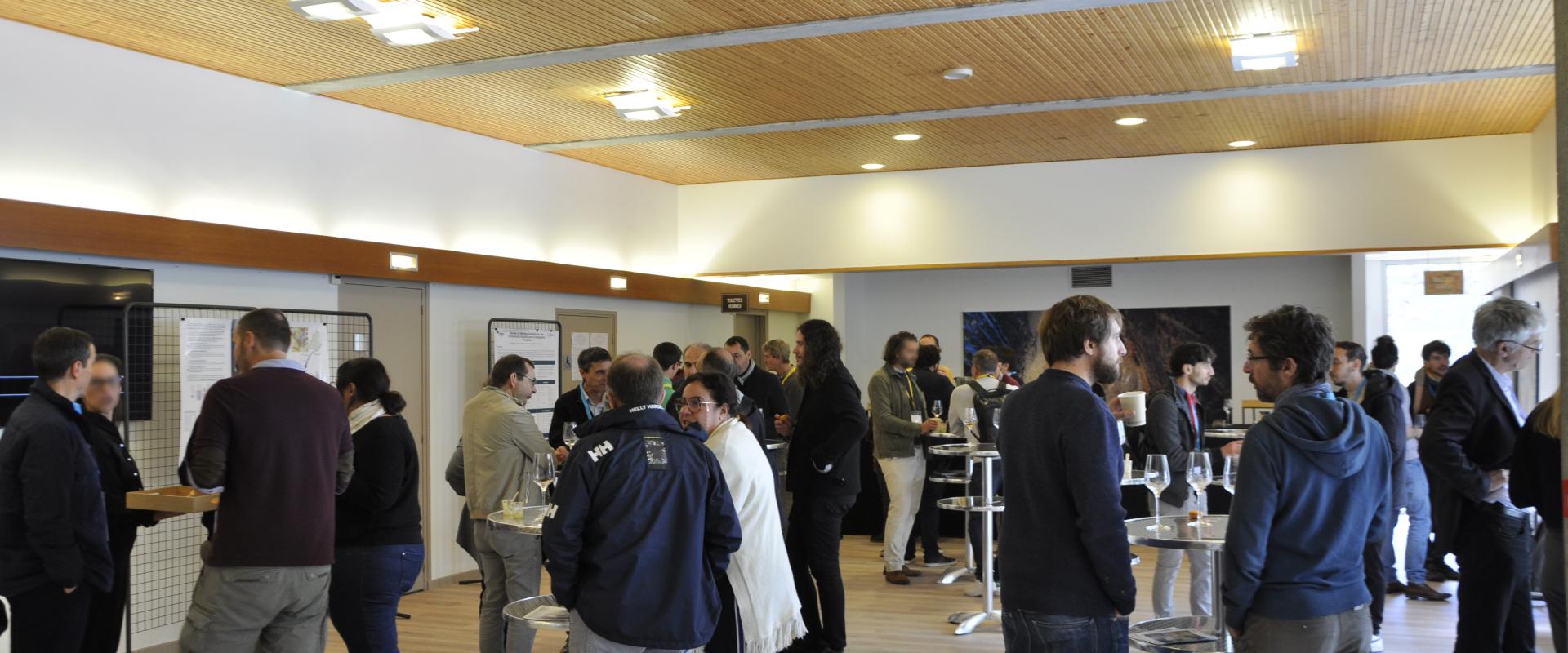
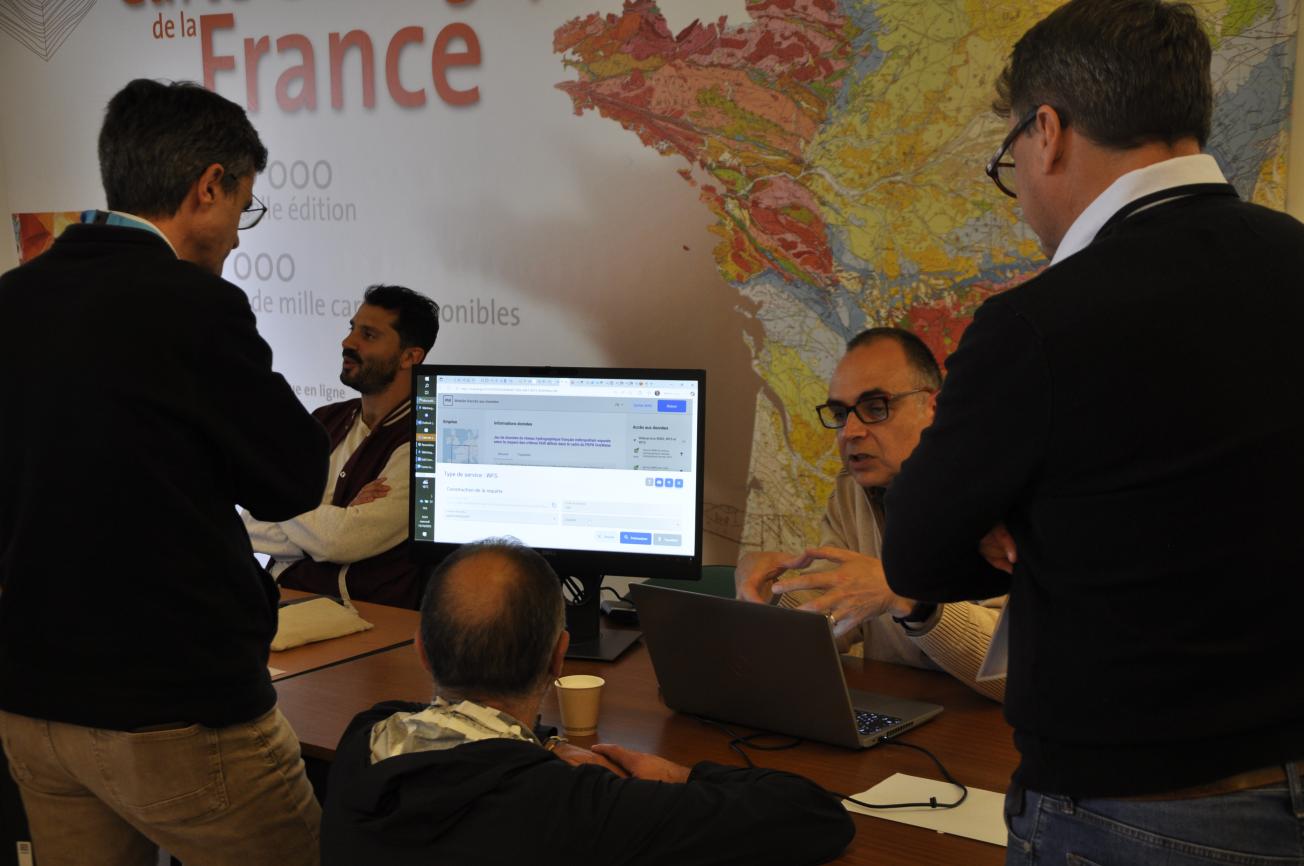
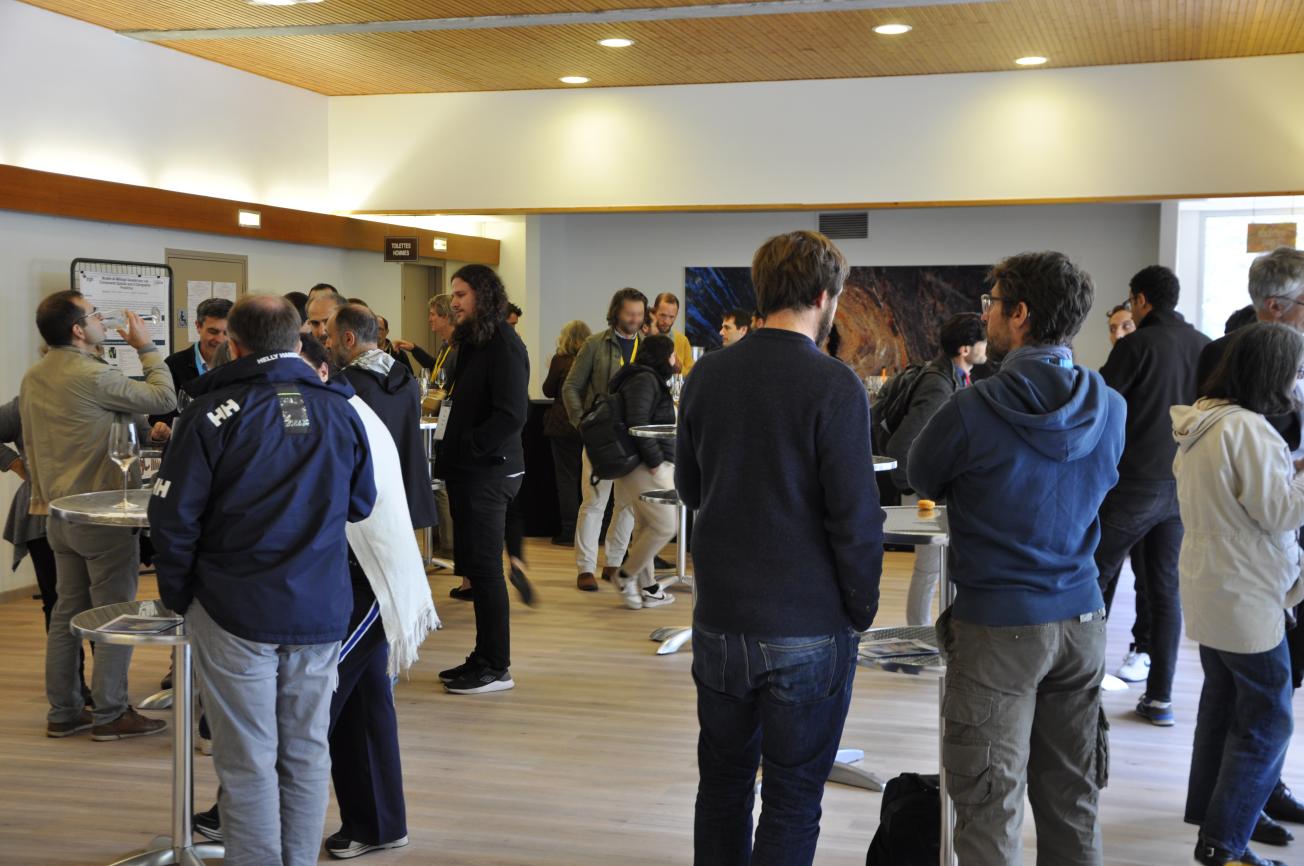
Moments of exchange and discussion occupied a central place in the program of these two days.
In addition to the summary presentations held in the auditorium, extended coffee breaks were structured around poster sessions presented by PhD students and postdoctoral researchers, as well as themed stands.
These sessions offered opportunities for more targeted and in-depth discussions among researchers around demonstrators, prototypes, and research results.
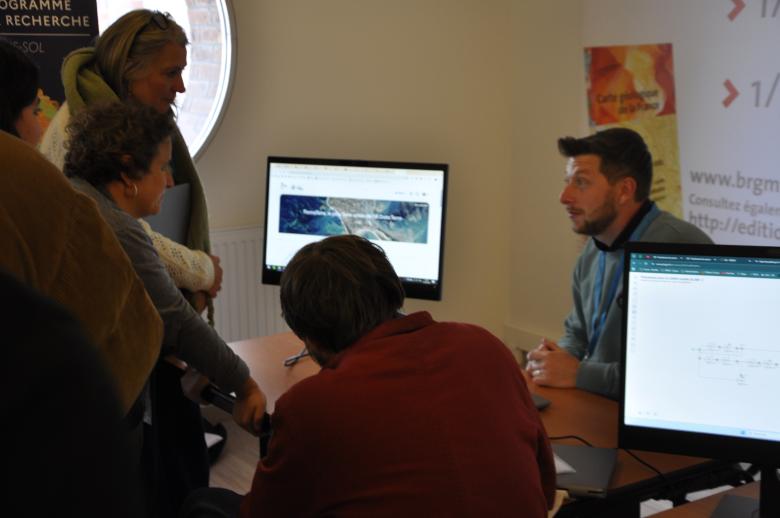
Participants were able to exchange around demonstrations focusing on:
- The standardized field data acquisition module (QField).
- The SI Géol information system.
- GIS tools supporting geological mapping.
- The Integrative Digital Platform (PNI).
- Orchestration tools for 3D geological modelling workflows.
- Artificial intelligence methods applied to regolith study.
Journée annuelle 2026 du projet Digital Earth
© PEPR Sous-sol, bien commun
Journée annuelle 2026 du projet Digital Earth
© PEPR Sous-sol, bien commun
Journée annuelle 2026 du projet Digital Earth
© PEPR Sous-sol, bien commun
Journée annuelle 2026 du projet Digital Earth
© PEPR Sous-sol, bien commun